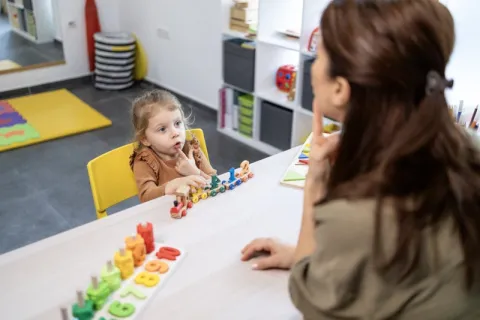
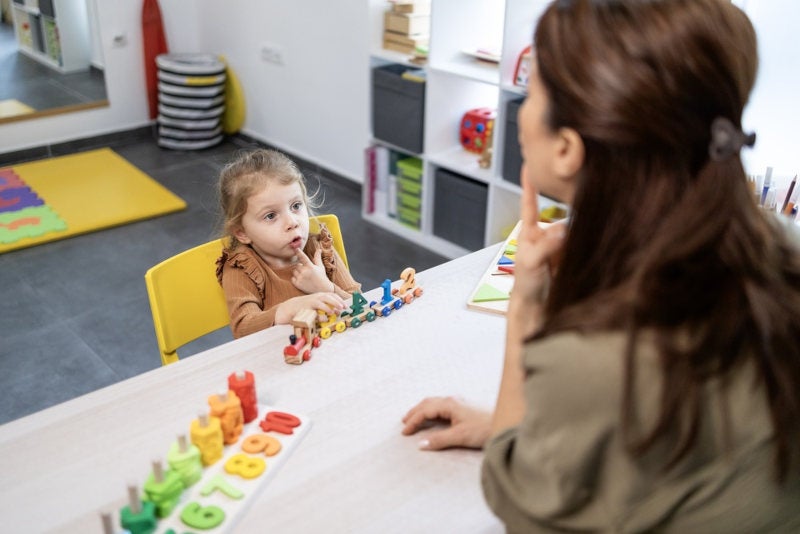
What Is an SLP in Education? Roles, Responsibilities, and How to Get Started
SLPs play an important role in supporting students’ communication, literacy, learning, and academic participation in schools. In fact, educational settings are the most common workplace for SLPs, with more than half of practicing speech-language pathologists employed in PK–12 schools.
School-based SLPs work with students across a wide range of communication needs, including speech sound disorders, language disorders, social communication differences, fluency disorders, cognitive communication challenges, and augmentative and alternative communication (AAC) needs. Because communication skills influence reading, writing, classroom participation, social interaction, and academic success, SLPs are often key members of educational support teams.
Although many people associate SLPs primarily with “speech therapy,” the role is much broader. School-based SLPs evaluate students, provide intervention, collaborate with teachers and families, support literacy development, contribute to individualized education programs (IEPs), and help students access meaningful participation across academic and social environments.
For many professionals, working in schools is both challenging and rewarding. School-based SLPs have opportunities to support students across developmental stages, collaborate within interdisciplinary teams, and help children build skills that affect educational success and long-term participation in daily life.
Why Many SLPs Choose Educational Settings
Educational settings offer SLPs opportunities to work directly within environments where the demand for communication and literacy occurs every day. Rather than supporting isolated skills alone, school-based SLPs often address communication within authentic academic and social contexts, including classroom participation, reading and writing activities, peer interactions, and collaborative learning.
Schools also provide opportunities for early identification and intervention. Addressing communication difficulties early may help reduce later academic and social challenges associated with speech, language, and literacy difficulties. In addition to the meaningful nature of the work, many SLPs appreciate the collaborative structure of educational settings. School-based SLPs frequently work alongside teachers, psychologists, occupational therapists, administrators, reading specialists, and families to support student success through coordinated intervention and educational planning.
What Do School-Based SLPs Actually Do?
The responsibilities of school-based SLPs vary depending on student needs, school settings, and age groups, but commonly include:
Assessment and Evaluation
SLPs evaluate students with suspected communication disorders using formal and informal assessment measures, classroom observations, language sampling, and collaboration with educators and families. Evaluations may examine areas such as:
- speech sound production,
- language comprehension and expression,
- social communication,
- fluency,
- voice,
- literacy-related language skills,
- and AAC needs.
- Intervention and Therapy
- SLPs provide individualized and small-group intervention designed to support communication and academic participation. Intervention may focus on:
- speech intelligibility,
- vocabulary and language development,
- literacy-related language skills,
- social communication,
- inferencing and narrative language,
- executive functioning supports,
- or AAC use.
Literacy Support
Because spoken and written language are closely connected, SLPs often support literacy development in collaboration with teachers and reading specialists. This may include support for:
- phonological awareness,
- vocabulary,
- syntax,
- reading comprehension,
- written language,
- inferencing,
- and discourse organization.
Collaboration and Educational Planning
School-based SLPs are active members of special education and intervention teams. They contribute to:
- eligibility determination,
- IEP development,
- classroom accommodations,
- progress monitoring,
- and collaborative intervention planning.
SLPs also work closely with families and educators to support carryover of communication strategies across settings.
Communication Needs Addressed by School-Based SLPs
School-based SLPs support students with a wide range of communication needs, including:
- speech sound disorders,
- developmental language disorders,
- social communication differences,
- fluency disorders such as stuttering,
- cognitive communication challenges,
- voice disorders,
- AAC needs,
- hearing-related communication differences,
- and feeding/swallowing concerns in some settings.
Importantly, communication difficulties may affect far more than speech production alone. Communication influences literacy development, classroom learning, peer relationships, self-advocacy, and participation across school environments.
Becoming a School-Based SLP
Speech-language pathologists must complete graduate-level professional training, supervised clinical experiences, certification requirements, and state licensure requirements. Most SLPs earn a master’s degree in speech-language pathology from an accredited program and complete clinical placements across educational and healthcare settings.
Many graduate programs now offer flexible or partially online learning models that allow students to complete coursework while gaining clinical experiences within their own communities.
Students with undergraduate degrees in communication sciences and disorders typically have the prerequisite coursework needed for graduate admission. Those with degrees in other fields may need to complete additional prerequisite courses before applying to an SLP graduate program.
Taking the First Step
School-based speech-language pathologists support far more than speech production alone. They help students develop the communication, language, literacy, and participation skills needed to engage successfully in academic, social, and everyday environments.
For individuals interested in education, communication sciences, healthcare, child development, literacy, and collaborative problem-solving, school-based speech-language pathology can offer a meaningful and professionally rewarding career path.
The St. Bonaventure University Master of Science in Speech-Language Pathology program offers:
- 100% online coursework with synchronous and asynchronous learning
- Supervised clinical education experiences,
- Clinical placement support,
- An educational philosophy focused on evidence-based, culturally responsive care centered on the individual client needs.
Explore our program page to learn more.
Frequently Asked Questions
Educational settings offer SLPs opportunities to work directly within environments where the demand for communication and literacy occurs every day. In addition to the meaningful nature of the work, many SLPs appreciate the collaborative structure of educational settings.
The responsibilities of school-based SLPs vary depending on student needs, school settings, and age groups, but commonly include: Assessment and Evaluation SLPs evaluate students with suspected communication disorders using formal and informal assessment measures, classroom observations, language sampling, and collaboration with educators and families. Collaboration and Educational Planning School-based SLPs are active members of special education and intervention teams.
School-based SLPs support students with a wide range of communication needs, including: speech sound disorders, developmental language disorders, social communication differences, fluency disorders such as stuttering, cognitive communication challenges, voice disorders, AAC needs, hearing-related communication differences, and feeding/swallowing concerns in some settings. Importantly, communication difficulties may affect far more than speech production alone.